Supporting little communicators and the families who love them.
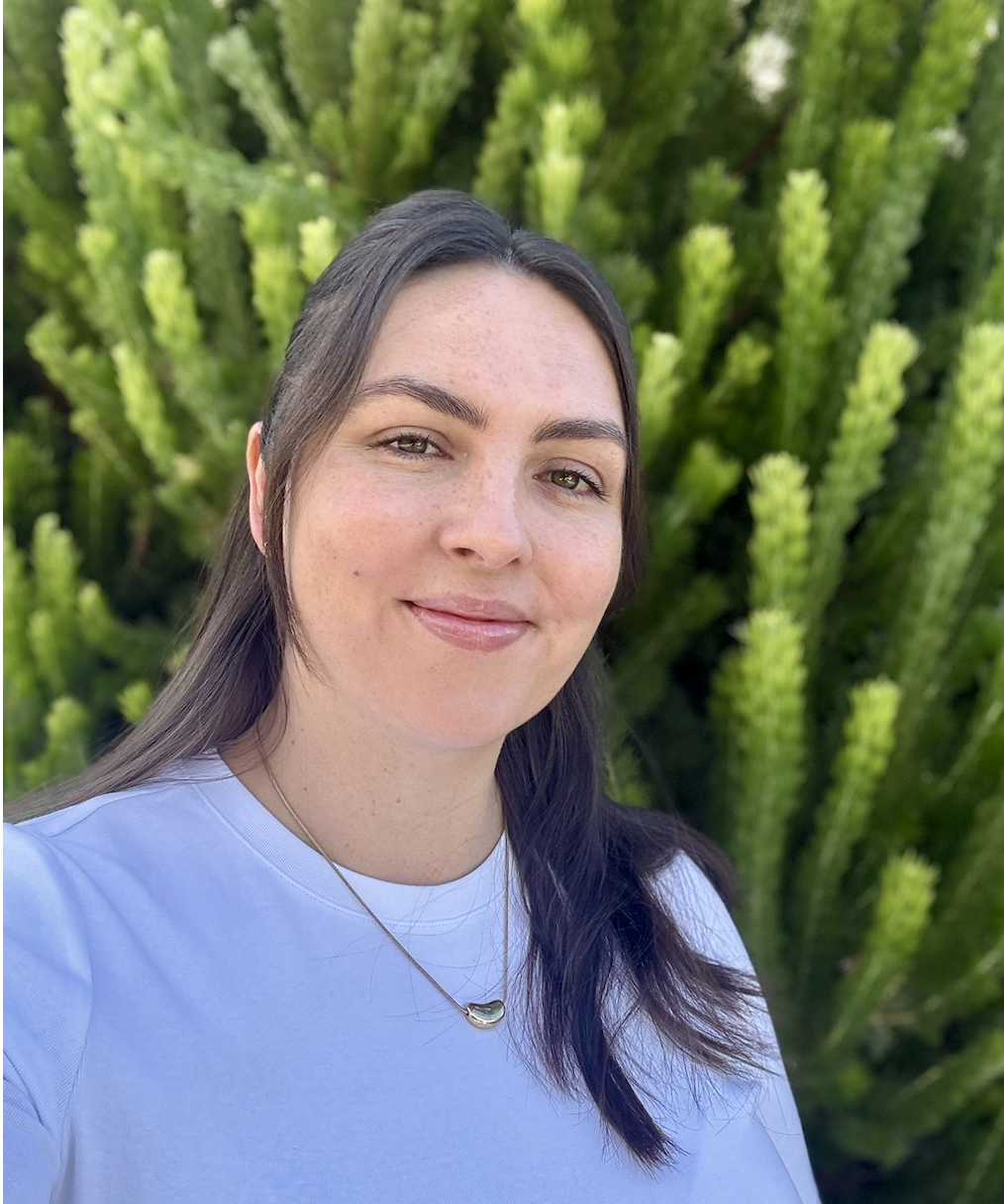
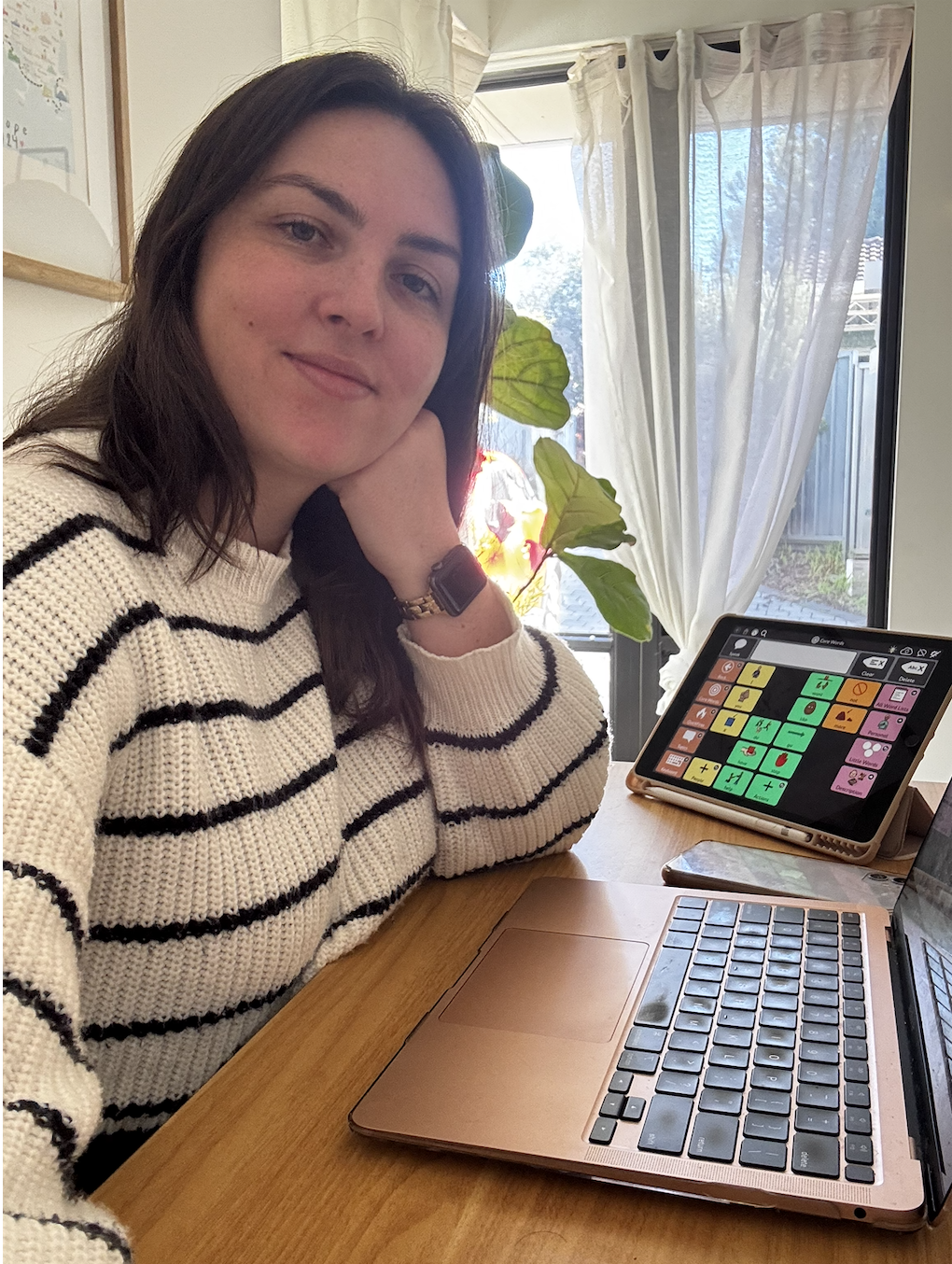
Hi, I'm Ebony — a speech pathologist who believes every child deserves to be heard, no matter how they communicate.
What I offer
Here to help with
I need help with...
Starting out with AAC
Comprehensive, family-centred assessments to identify the right communication system — from feature matching to trial and recommendation.
I need help with...
Building AAC skills
Ongoing, play-based therapy to build your child's use of their AAC system — from first words to full sentences and beyond.
I need help with...
Feeling confident with AAC
Practical, supportive coaching for you, the parent! So you feel confident using AAC with your child every day — at mealtimes, during play, and beyond the therapy room.
"Every child deserves to be heard."
About Ebony
You've found the right place
Whether you're worried about your child's first words, exploring AAC, or just not sure where to start — you're in the right place. I work alongside families, not just for them.
Every session is built around your child and your family. No jargon, no judgment — just genuine support.
Resources
AAC Resources & Downloads
Practical, beautifully designed resources for families and therapists — available to download and use straight away.
About me
Hi, I'm Ebony!
I'm a speech pathologist with a big passion for AAC and early intervention. I started this work because I believe every single child has something to say — and every family deserves real support in helping them say it.
I work with families, not just children. Because the most meaningful progress happens at home, at the dinner table, in the car — not just in a therapy room.
What I believe
My values
Connection first
From our very first conversation, I want you to feel like you belong here.
Evidence & heart
I use what the research says AND what your family tells me — because both matter equally.
Family-centred
You know your child better than anyone. My job is to support you, not replace you.
My journey
Why speech pathology
I've always been drawn to the moments where communication sparks connection — the first time a child points to what they want, the moment a parent understands their child without words, the relief on a family's face when they finally feel supported.
My specialist focus on AAC came from a place of deep conviction: that every child, regardless of their communication profile, deserves access to a voice that is truly their own.
I hold a degree in Speech Pathology and am a certified practising member of Speech Pathology Australia. I regularly pursue professional development in AAC, early intervention, and family-centred practice.
Ready to connect?
Let's work together
Whether you're a family looking for support or a therapist seeking connection, I'd love to hear from you.
For Families
Not sure where to start? That's okay.
Whether you've just noticed something feels different, or you've been on this journey for a while — I'd love to help. There's no wrong time to reach out.
Services
How I can support your child
Early Intervention
Early support can make a profound difference. I offer assessment and therapy for children from infancy through early childhood, tailored to their individual needs.
AAC Assessment & Therapy
I specialise in augmentative and alternative communication — from low-tech boards to high-tech devices — and work with your family to find the right fit.
Parent & Carer Coaching
You are your child's most important communication partner. I offer coaching sessions to help you feel confident and connected in everyday moments.
What to expect
What to expect
1
Initial consultation
We'll have a relaxed chat about your child and your family. Ask anything — there are no silly questions.
2
Assessment
A gentle, play-based session to get to know your child and understand how they communicate best.
3
Therapy & support
Therapy that fits your family's life, with regular check-ins and honest conversations along the way.
Ready to begin?
Book a consultation
Ready to take the first step? Book a free 15 minute phone call and we'll go from there. No commitment, no pressure — just a friendly chat.
One-on-one mentoring for speech pathologists building confidence and skill in AAC and early intervention. Practical, warm, and grounded in real-world practice.
AAC Consultation
Complex case consultation for clinicians working with children who use or are exploring AAC. Collaborative and reflective, not prescriptive.
Webinars & Workshops
Online learning opportunities covering AAC practice, early intervention, and family-centred approaches. Practical content you can use straight away.
Webinars
Learn with me
I run regular online webinars for speech pathologists and allied health professionals. Topics range from practical AAC implementation to supporting families through the diagnostic journey.
Sessions are small, interactive, and designed for real clinical application — not just theory.
AAC Resources
Resources for your practice
A growing library of downloadable resources designed with clinicians in mind — practical tools you can use in sessions, share with families, and adapt to your context.
Insights & ideas
From the blog
Real talk about communication, AAC, and supporting families — written for parents and therapists who want honest, practical insights.
No posts found
For Families
September 2025
AAC coaching for parents: why it's essential for your child's success
The most important AAC work doesn't happen in a therapy room. Here's why parent coaching changes everything.
For Families
August 2025
AAC and autism: what families need to know
A warm, practical guide for families navigating AAC alongside an autism diagnosis.
For Families
July 2025
How to get an AAC device funded through the NDIS
A practical overview of what's involved, what evidence you need, and what to expect from the process.
For Families
June 2025
What is aided language stimulation and why it's the most important thing you can do for your AAC learner
You may have been told to "model on the device" — here's what that actually means and how to do it.
For Families
May 2025
What to do when your child refuses to use their AAC device
It happens more often than you'd think. Here's why it happens and what you can actually do about it.
AAC
April 2025
AAC myths busted: will it stop my child from talking?
One of the most common fears families have — and why the research consistently says the opposite is true.
For Therapists
March 2025
How to support an AAC user in the classroom: a guide for teachers and support workers
Simple, practical strategies that make a real difference for AAC users in school every day.
For Therapists
February 2025
Getting started with core vocabulary: a practical guide for new SLPs
Core vocabulary is the backbone of AAC. Here's how to introduce it in a way that actually works in real sessions.
For Families
January 2025
Is my child too young for AAC?
One of the most common questions families ask — and why the answer is almost always no.
For Families
December 2024
High tech vs low tech AAC: what's the difference and which one does my child need?
There are apps, devices, picture boards and more. Here's how to make sense of it all.
AAC Resources
Resources for families & therapists
Practical resources designed for real life — whether you're a parent wanting to support communication at home, or a therapist looking for ready-to-use tools.
Family resource
Wombat Stew AAC Adapted Book & Communication Board
An AAC adapted book and communication board based on the beloved Australian picture book Wombat Stew. Perfect for early AAC learners.
AAC myths busted: will it stop my child from talking?
By Ebony, Speech Pathologist
If I had a dollar for every time a parent said "but won't it stop them from trying to speak?" — let's just say I'd have a lot of dollars. It's one of the most common concerns I hear from families when AAC first comes up. And honestly? It makes complete sense to worry about it.
The short answer: no, AAC does not stop children from talking.
In fact, the research says the opposite is true. Study after study has shown that introducing AAC actually supports speech development rather than replacing it. Children who use AAC often go on to develop more spoken words over time, not fewer. Giving a child a way to communicate reduces their frustration and creates more opportunities for connection — and connection is exactly where language grows.
So where does this myth come from?
I think it comes from a very natural fear. We see our child reaching for a device or a picture board and we think, "if they can get what they need without talking, why would they bother?" But communication doesn't work like that. When children feel heard and understood, they want to communicate more. Not less. AAC gives them the confidence to try.
What AAC actually looks like
AAC is not one thing. It includes high-tech speech generating devices, low-tech picture boards, key word sign, and combinations of all of these. The goal is always to give your child as many ways to communicate as possible. More tools, more connection, more language.
TLDR
•AAC does not stop children from talking. Research consistently shows it supports speech development.
•Children who use AAC often develop more spoken words over time, not fewer.
•AAC includes devices, picture boards, key word sign, and more.
•Every child deserves a voice right now, not just when speech arrives.
Getting started with core vocabulary: a practical guide for new SLPs
By Ebony, Speech Pathologist
When I first started working in AAC, core vocabulary felt overwhelming. There were so many words, so many systems, and so much pressure to get it right. If that sounds familiar, this one's for you.
What is core vocabulary?
Core vocabulary refers to the small set of words that make up the majority of what we say every day — words like "go", "more", "stop", "want", "help", "like", "no". Research shows that around 80% of what we say comes from a core set of roughly 200 to 400 words.
Why does it matter for AAC?
Most early AAC systems are loaded with nouns. But nouns alone limit what a person can actually say. Core vocabulary gives AAC users the power to communicate across every context — not just label objects. It's the difference between labelling and communicating.
How to introduce core vocabulary in sessions
Start with a small set of high-value words like "more", "go", "stop", "want" and "help". Model on the AAC system yourself — this is called aided language stimulation and it is the most powerful teaching tool we have. Don't expect immediate output. Keep it playful and follow the child's lead.
TLDR
•Core vocabulary is the small set of words that make up most of what we say every day.
•Around 80% of our language comes from about 200 to 400 core words.
•Model core words on the AAC system yourself — it's the single most powerful thing you can do.
•Keep sessions playful and follow the child's lead.
This is one of the questions I hear most often from families. And almost every time, my answer is the same: no. Your child is not too young. In fact, the earlier we introduce AAC, the better.
What the research actually says
There is no minimum age for AAC. Research consistently shows that AAC can be introduced from as young as 9 to 12 months when communication concerns are identified. Early AAC use supports language development, reduces frustration, and does not stop children from learning to speak.
What about babies and very young toddlers?
Early AAC for very young children often looks like a simple core board, key word sign, or a few symbols in a communication book. It's introduced gently, modelled by the adults around the child, and woven into everyday routines. We're not sitting a baby in front of a screen — we're building the foundations for communication.
The bottom line
Communication is not something children should have to wait for. If there are concerns, acting early is always better than waiting. If you're not sure whether AAC is right for your child, that's exactly what an assessment is for.
TLDR
•There is no minimum age for AAC. It can be introduced from 9 to 12 months.
•Early AAC use supports language development and does not stop speech from developing.
•If you have concerns, early action is always better than waiting.
High tech vs low tech AAC: what's the difference and which one does my child need?
By Ebony, Speech Pathologist
If you've started looking into AAC for your child, you've probably already felt the overwhelm. There are apps, devices, picture boards, sign systems and everyone seems to have a different opinion. Here's the thing: there is no single best AAC system. What matters is finding the right fit for your child.
What is high tech AAC?
High tech AAC refers to electronic devices that generate speech — dedicated communication devices as well as apps on tablets or iPads. Common apps in Australia include Proloquo2Go, TouchChat, LAMP Words for Life, and Snap Core First.
What is low tech AAC?
Low tech AAC includes picture boards, communication books, PECS, core word boards, and key word sign. Low tech tools are more portable, more durable, and just as effective as high tech options for many children. Low tech is also often where we start, especially with younger children.
The most important thing
Whatever system your child uses, the adults around them need to use it too. Modelling language on the AAC system is the single most important thing you can do. The best AAC system in the world won't work if it sits in a drawer.
TLDR
•High tech AAC uses electronic devices or apps to generate speech.
•Low tech AAC includes picture boards, communication books, and key word sign.
•There is no single best AAC system — the right fit depends on your child.
•Whatever system your child uses, the adults around them need to model it too.
You've just found out there's a student in your class who uses AAC. Maybe it's a communication device, a picture board, or an app. And maybe you're feeling a little unsure about where to start. That's completely okay — most teachers and support workers don't get trained in AAC. But with a few simple strategies, you can make a huge difference for that child every single day.
Use the AAC system yourself
This is the single most important thing you can do. When you use a child's AAC system yourself — pointing to symbols as you talk — you show them what it looks like to communicate that way. Ask the child's speech pathologist to show you how.
Make sure the AAC system is always accessible
A child cannot communicate with their AAC system if it's in their bag, charging in another room, or put away. The device or board needs to be within reach at all times — every lesson, every break, every transition.
Give the child time to respond
Using AAC takes longer than speaking. Try counting to 10 in your head after asking a question before responding or moving on. That wait time is not awkward — it's essential.
TLDR
•A child's AAC system is their voice. Keep it accessible at all times.
•Use the AAC system yourself during lessons and activities.
•Give the child at least 10 seconds to respond before jumping in.
•Include AAC users in the same class discussions as everyone else.
What to do when your child refuses to use their AAC device
By Ebony, Speech Pathologist
You've gone through the assessment. You've got the device. And now your child won't touch it. This is one of the most common and frustrating situations families face. It doesn't mean AAC isn't right for your child — it usually just means something needs to shift.
Why children refuse their AAC device
Common reasons include vocabulary that isn't meeting their needs yet, too much pressure around the device, not enough adult modelling, or simply unfamiliarity with a new piece of technology.
What you can do
Take the pressure off completely for a week or two — no prompting, no expectations. Follow the child's lead and use the device during activities they love. Model without expecting the child to copy you. Make sure the vocabulary that matters to them is easy to find. Keep the device accessible and charged at all times.
A word on timelines
AAC uptake takes time. Sometimes a lot of time. Consistent, low-pressure exposure and modelling is the key. Think of it like planting seeds — you can't always see what's happening underground, but the work is making a difference.
TLDR
•Device refusal is very common and doesn't mean AAC isn't right for your child.
•Take the pressure off completely for a week or two. No prompting, no demands.
•Follow the child's lead and model on the device yourself without expecting them to copy.
•Keep the device accessible and charged at all times. AAC uptake takes time.
What is aided language stimulation and why it's the most important thing you can do for your AAC learner
By Ebony, Speech Pathologist
If you've ever been told to "model on the device" and nodded along while secretly thinking "but what does that actually mean?" — this one is for you. Aided language stimulation is probably the single most powerful strategy in AAC.
So what is it?
Aided language stimulation is when the people around an AAC user point to symbols on the AAC system while they talk. You just talk the way you normally would, and as you speak, you touch the relevant symbols on the board or device. You're not asking the child to do anything. You're just showing them what communication via AAC looks like.
Why does it work?
Children need to see the symbols being used over and over before they will start using them themselves — just like spoken words. Research consistently shows that children whose communication partners model on their AAC system develop stronger AAC skills, faster.
How to get started
Pick one or two activities you do every day. Start with common core words like "more", "go", "stop", "want" and "finished" — these work across almost every activity. Keep it light and fun. If you're not sure which words to point to, that's a great question for your speech pathologist.
TLDR
•Aided language stimulation means pointing to symbols on the AAC system while you talk naturally.
•You are not asking the child to do anything — just showing them what AAC looks like.
•Research shows it is the most effective strategy for building AAC skills.
•Start with one or two daily activities and a small set of core words.
If your child uses AAC or you think they might benefit from it, the NDIS can be a really important source of support. Navigating funding can feel confusing, so here's a general overview of how AAC support is typically funded.
What can the NDIS fund?
Speech pathology services are typically funded under Capacity Building (Improved Daily Living). AAC devices and equipment are typically funded under Assistive Technology. Your child needs an active NDIS plan to access this funding.
What evidence do you need for a device?
The NDIS typically requires an AT assessment report from a qualified speech pathologist. This includes trialling different options and demonstrating why the recommended device is the best fit — showing both clinical appropriateness and value for money. This is called a feature matching assessment.
What to know about timelines
Once submitted, there is no set timeframe for hearing back. Keep in regular contact with your LAC and follow up consistently. Submitting an AT application can also sometimes trigger a plan review — it's worth being prepared for this and thinking about timing.
TLDR
•AAC therapy is funded under Capacity Building; devices under Assistive Technology.
•Your child needs an active NDIS plan.
•A speech pathologist completes an AT assessment report including trialling options.
•Keep in contact with your LAC and follow up regularly.
Please note: NDIS guidelines change regularly. This is a general overview only.
If your child has recently been diagnosed with autism, or if you've been told that AAC might help them communicate, you probably have a lot of questions. Let's go through them.
Why is AAC commonly recommended for autistic children?
AAC gives children a reliable, consistent way to communicate regardless of where their speech is at. For children who find spoken language difficult, AAC can reduce frustration, support connection, and open up communication that might otherwise feel out of reach. Many autistic children who use AAC go on to develop spoken language alongside it — AAC is a support, not a ceiling.
Something worth knowing: Gestalt Language Processing
Some autistic children are Gestalt Language Processors — they learn language in whole chunks or phrases rather than word by word. You might notice this if your child uses long memorised scripts from TV shows or echoes whole phrases. For these children, an AAC system that includes phrases can be really beneficial.
What can families do right now?
Get a speech pathology assessment if you haven't already. In the meantime, follow your child's lead. Notice how they communicate right now — pointing, leading you by the hand, using sounds. All of that is communication. Build on it.
TLDR
•AAC is commonly recommended for autistic children who have difficulty communicating through speech alone.
•AAC supports speech development in autistic children. It does not replace speech.
•Some autistic children are Gestalt Language Processors and may benefit from AAC systems that include phrases.
•A speech pathology assessment is the best place to start.
AAC coaching for parents: why it's essential for your child's success
By Ebony, Speech Pathologist
Here's something I believe deeply: the most important AAC work doesn't happen in a therapy room. It happens at breakfast, in the car, during bath time — in the everyday, ordinary moments that make up your child's life. That's why parent coaching is not an add-on to AAC therapy. It is the heart of it.
What is AAC parent coaching?
AAC parent coaching is when a speech pathologist works directly with you — not just with your child — to build your confidence and skills in supporting AAC at home. The goal is to make sure that the strategies that help your child communicate come home with you.
Why does it matter so much?
Think about how many hours your child spends with their speech pathologist each week. For most families, it's one hour. Maybe two. Now think about how many hours they spend with you. Research consistently shows that children whose families are actively involved in their AAC use develop communication skills faster and more robustly.
What should you ask for?
If your child is receiving AAC therapy, ask your speech pathologist how parent coaching is built into the service. It should be a regular, intentional part of the support you receive. AAC works best as a team effort — and you are the most important member of that team.
TLDR
•The most important AAC work happens at home, not in a therapy room.
•Children whose families are actively involved in AAC develop communication skills faster.
•Parent coaching should be a regular, intentional part of your child's AAC support.
•You are the most important member of your child's AAC team.
📅2027 spots opening in the Illawarra — now taking expressions of interest
Waitlist now open
New AAC therapy spots opening in the Illawarra in 2027
I'm opening a limited number of spots for families in the Illawarra — including Albion Park, Shellharbour, Oak Flats, Blackbutt, Kiama, Kiama Downs and surrounding areas. Register your interest now and I'll be in touch to learn more about your family.
You're on the list!
You're on the list — we will contact you shortly with more information.